Untreated sleep apnea raises Parkinson’s risk, but CPAP helps
Analysis of veteran health records shows unmanaged apnea nearly doubles risk


- Untreated obstructive sleep apnea (OSA) nearly doubles Parkinson's disease risk.
- OSA causes brain stress, linked to Parkinson's pathology like alpha-synuclein changes.
- Early CPAP treatment for OSA reduces Parkinson's risk by 30% and improves outcomes.




An analysis of electronic health records from 11.3 million U.S. veterans suggests obstructive sleep apnea nearly doubles the risk of developing Parkinson’s disease. But early treatment with continuous positive airway pressure (CPAP), the standard therapy for the condition, may cut that risk by about 30%, the study found,
“If you stop breathing and oxygen is not at a normal level, your neurons are probably not functioning at a normal level either,” lead author Lee Neilson, MD, assistant professor of neurology at Oregon Health & Science University and a neurologist at the Portland VA Medical Center, said in a university press release. “Add that up night after night, year after year, and it may explain why fixing the problem by using [continuous positive airway pressure] may build in some resilience against neurodegenerative conditions, including Parkinson’s.”
The findings support the introduction of “early screening and intervention of sleep-disordered breathing as a key strategy in supporting brain health,” the researchers wrote.
The study, “Obstructive Sleep Apnea, Positive Airway Pressure, and Implications of Early Treatment in Parkinson Disease,” was published in the journal JAMA Neurology.

Lifestyle changes may slow neurodegeneration
Parkinson’s disease is the world’s fastest-growing neurological disorder, driven by an aging population and possibly by lifestyle factors. Although lifestyle changes have been proposed as a way to delay neurodegeneration, evidence specific to Parkinson’s disease is limited.
A hallmark of the disease is the accumulation of phosphorylated alpha-synuclein, a modified form of the alpha-synuclein protein that can clump and form insoluble aggregates, leading to the death of nerve cells that produce dopamine, a neurotransmitter needed for coordinating muscle movement.
Obstructive sleep apnea (OSA) is marked by pauses or reductions in breathing during sleep. These events result in intermittent drops in blood oxygen and spikes in carbon dioxide, leading to metabolic, inflammatory, and cardiovascular stress. In the brain, these repeated episodes of low oxygen can cause mitochondrial dysfunction, a process that has been linked with Parkinson’s.
People with OSA have been shown to have elevated blood levels of phosphorylated alpha-synuclein and a reduction in dopamine in the striatum, a brain region crucial for motor control.
Despite such biological clues, studies investigating whether OSA increases Parkinson’s risk have produced mixed results. Some found no connection, while others — especially those using large electronic health record datasets — suggested an association but were limited by imprecise diagnoses and inadequate control for confounding factors.
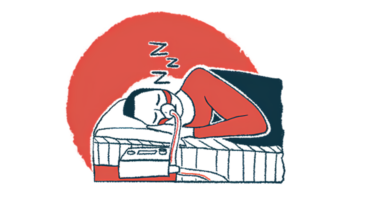
No prior research has investigated whether treating OSA with continuous positive airway pressure (CPAP) might reduce the potential increased risk of Parkinson’s, the researchers said. CPAP delivers a steady stream of air through a mask worn over the nose or both the nose and mouth, ensuring that the airways remain open and breathing is maintained without interruption.

Analyzing health records
The OHSU researchers analyzed health record datasets from 11.3 million U.S. military veterans (90.1% men, with a mean age of 60.5) who received care through the Department of Veterans Affairs from 1999 through 2022.
About 1.5 million participants (13.7%) had OSA, and 144 ,643 (9.3%) of those had documented CPAP use. Veterans with OSA were generally older and had a higher body mass index (BMI), a measure of body fat.
Over an average follow-up time of 4.9 years, veterans with OSA showed a significantly higher incidence of Parkinson’s, corresponding to a 1.92-fold increase in the risk of developing the disease, than those without OSA.
“It’s not at all a guarantee that you’re going to get Parkinson’s, but it significantly increases the chances,” said Gregory Scott, MD, PhD, assistant professor of pathology in the OHSU School of Medicine and a pathologist at the Portland VA.
This increased risk remained consistent across multiple analyses, including those that adjusted for BMI and included a one-year delay before counting diagnoses. The effect was especially pronounced in women with OSA, who had a 4.24-fold higher risk.
When OSA severity was assessed using computer-processed clinical notes, researchers found that both mild and severe OSA increased Parkinson’s risk, with severe OSA linked to earlier and higher incidence.
The researchers also evaluated whether CPAP use changed the risk of developing Parkinson’s. CPAP use within two years of an OSA diagnosis was associated with a significant reduction in Parkinson’s incidence. After five years, CPAP users had a 31% reduced risk of developing the disease. This protective effect remained after adjustments for multiple factors, including BMI, blood flow disorders, sleep-related disorders, traumatic brain injury, and medications that affect dopamine signaling.
Further analysis showed that among people who eventually developed Parkinson’s, CPAP users did not differ from nonusers in early motor or nonmotor symptoms. However, after diagnosis, early CPAP use was associated with lower rates of falls, fractures, and mortality, suggesting additional long-term benefits.
While people may often resist treatment with CPAP, “the Veterans who use their CPAP love it,” Scott said. “They’re telling other people about it. They feel better, they’re less tired. Perhaps if others know about this reduction in risk of Parkinson’s disease, it will further convince people with sleep apnea to give CPAP a try.”
About the Author