
Unixell’s off-the-shelf stem cell therapy cleared for US clinical trials
Company plans parallel testing in China for donor-derived treatment UX-DA003
Written by |
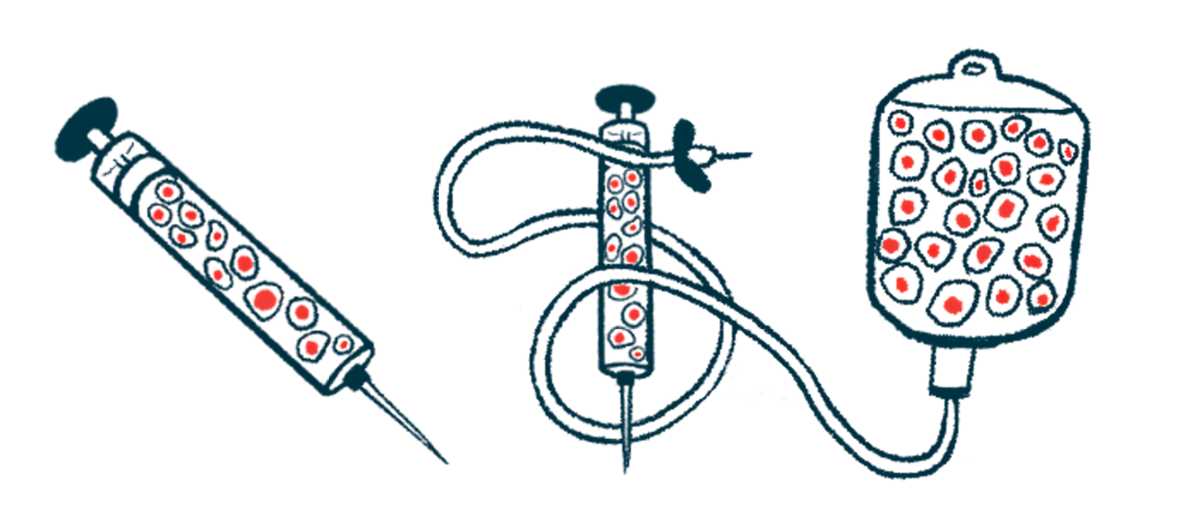
- New stem cell therapy (UX-DA003) for Parkinson's disease cleared for US clinical trials.
- Aims to replace lost dopaminergic neurons, addressing motor and nonmotor symptoms.
- Uses donor-derived induced pluripotent stem cells.
Clinical trials of UX-DA003, an experimental stem cell therapy for Parkinson’s disease developed by Unixell Biotechnology, can now begin in the U.S. following clearance from the Food and Drug Administration (FDA).
The therapy aims to replace dopaminergic neurons, which are the nerve cells lost in Parkinson’s. It uses induced pluripotent stem cells (iPSCs) derived from mature cells of a healthy donor and reprogrammed in the lab into a stem-cell-like state. The company is also developing UX-DA001, a similar treatment that uses the patient’s own cells to obtain iPSCs.
In both cases, the iPSCs are differentiated into dopaminergic neuron precursor cells, which are implanted into the patient’s brain, where they are expected to develop into dopaminergic neurons.

Simultaneous global development
The FDA’s decision comes shortly after a similar approval was granted by the regulatory agency in China, allowing for parallel clinical development of the therapy in both countries. UX-DA001 is currently being tested in a Phase 1 clinical trial (NCT06778265) in China.
“The FDA IND clearance of UX-DA003 is a critical step in our global clinical layout,” Lanlin Wu, Unixell’s CEO, said in a company press release. “We will continue to advance parallel clinical development in China and the U.S., and push forward the global commercialization of innovative iPSC-based therapies for neurodegenerative diseases.”
Parkinson’s is caused by the gradual loss of dopaminergic neurons, which produce dopamine, a signaling molecule involved in motor control. As these neurons die, patients typically develop motor symptoms such as tremors, rigidity, and slowed movements, as well as nonmotor symptoms.
Replacing these neurons could help delay disease progression and alleviate symptoms. One approach, such as UX-DA003, uses iPSCs derived from a healthy donor and is known as an allogeneic therapy. This enables a scalable, off-the-shelf treatment because cells from a single donor can treat multiple patients.
In contrast, UX-DA001 uses iPSCs derived from the patients themselves, which is called an autologous therapy. This personalized approach reduces the risk that the patient’s immune system will reject the treatment.
Both therapies build on Unixell’s technology called Single-Cell Split Barcoding lineage tracing platform, which allows researchers to track the fate of individual progenitor cells, as well as a high-precision stem cell differentiation platform, according to the company’s website.
Preclinical studies show that the proportion of functional dopaminergic neurons surviving after transplantation reaches 50% to 60%, with promising long-term safety. The cells demonstrated a low proliferation rate of 0.23% after six months, indicating a lower risk of the uncontrolled growth that can lead to tumor formation, which is a potential complication of stem cell therapies.
Additionally, because of optimized cell purity, the therapy required a 50% to 80% lower dosage than other cell therapies.
“Autologous and allogeneic iPSC therapies target distinct clinical scenarios for Parkinson’s disease. Our dual-pathway strategy not only provides flexible, individualized treatment options for patients but also accelerates the scalable industrialization of iPSC regenerative medicine,” Wu said.

Fred
I have been receiving a one hour infusion every 30 days of a mono clonal antibody vaccine called Prasinezumab for four years. It is now in a phase 3 trial with 1000 people around the world. My neurologist, Dr. Kevin Klos has 20 patients in the trial in Tulsa, Ok. I was in the phase 2 trial and I am receiving the drug off label as long as a trial is active. I have experienced no discernible progression in four years.
Thomas R Moody
Id like to volunteer for this trial.
Thanks
Tom Moody. 304-533-2491
Riazahmed Syed
Its a great innovation in the battle of PD management if it suceeds
Riazahmed Syed
We are seeing almost every 5 years new forms of therapy including faecal transplant yet with no positive results
Shivaji Ghotgolkar
Parkinson's Tretment
Paul Azzopardi
As a Parkinson’s sufferer I am most interested in the progress of stem cell therapy
Shelly Holland
Where do I apply to be considered for participation in the trial.
Russell Dees
As many of us care givers would say, how do I donate and how can we get on the list for trials! After reading what China had done, we were so excited to see what was being done. This is taking too damn long for our patients. Understandably, this needs to be safe, but damn it, we jumped on covid, let's do this!
Elba Vazquez
My son was diagnosed w PD at 48yrs. He is 56 yrs old. He is taking 6 Rytary pills per day. The higher dose.
If he can received or participate in the trials?
Maree Passmore
I would be over joyed if my husband Gary who is suffering with severe freezing symptoms and dyskinesia from PD could go on a trial for this new treatment. I would like to keep up with all the latest news.
Montague Elizabeth
I had DBS. Interested in your stem cell study. I was diagnosed Feb 2017.
Liz Montague
541-971-8531
skchuk
what are the details for participation in the study?
Anj Sharma
Is it okay for parkinsonism
Msa p
M,sa c?
Peter Nutliz
I'm a Parkinsons patient for 25 years. Could stem cell therapy work for advanced patients??
Sandra
How do I sign up as a patient for the study?
Dean Witmer
How can I sign up to participate in the trials?
Eloise Goldberg
Very interested I’m doing stem cell now anything I can tell my Dr.to improve my treatment is essential
Dean Tully
I have parkinson's disease. How do I volunteer for a study?
Thanks
Vicki Sanders
How can I participate in the stem cell clinical study trials