
Turmeric compound may protect motor function in Parkinson’s mouse model
Preclinical study links curcumin’s effects to cellular recycling pathways
Written by |
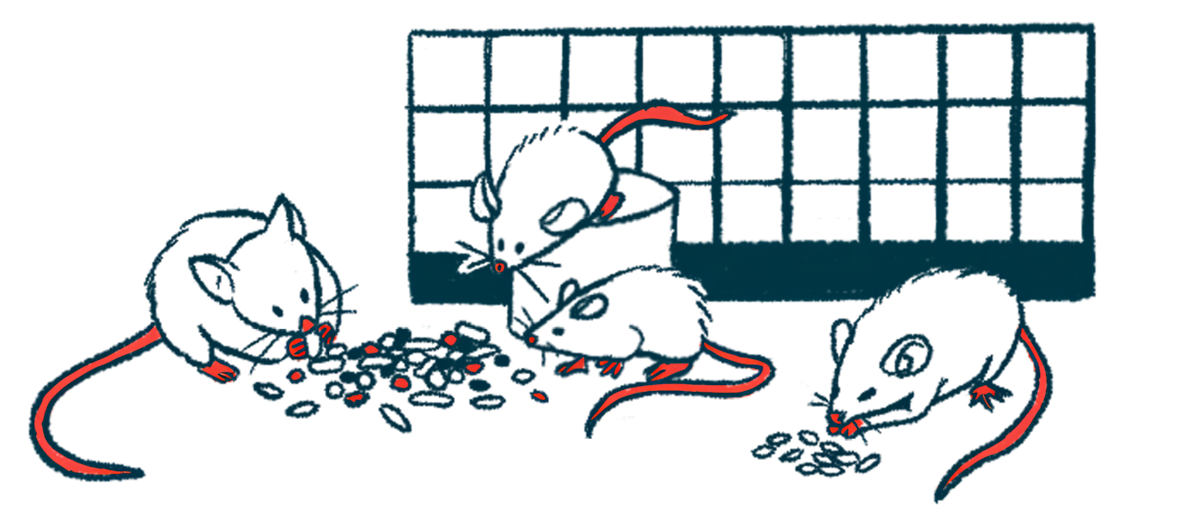
- Curcumin pretreatment helped protect motor function in a Parkinson’s mouse model.
- It activated autophagy and reduced cuproptosis, a copper-dependent form of cell death.
- The findings point to curcumin, autophagy, and cuproptosis as possible targets for further Parkinson’s research.
Pretreatment with curcumin, a compound found in the spice turmeric, helped protect motor function in a mouse model of Parkinson’s disease, a new study found.
Findings suggest that curcumin helped protect dopamine-producing nerve cells by activating autophagy, a process cells use to recycle unneeded material. This cellular recycling process, in turn, appeared to reduce cuproptosis, a copper-dependent form of regulated cell death. The researchers proposed that these biological pathways might be useful targets for new Parkinson’s treatments.
The study, “Curcumin Attenuates Cuproptosis via Activating Autophagy Through Inhibition of the AKT/mTOR/P70S6K-Signaling Pathway in Parkinson’s Disease Models,” was published in Molecular Neurobiology.

Turmeric compound studied as a possible Parkinson’s therapy
Parkinson’s is a neurological disease characterized by the progressive loss of brain cells that produce dopamine, a chemical messenger involved in movement. The loss of these dopamine-producing cells disrupts normal nerve signaling in the brain, ultimately leading to disease symptoms.
Turmeric is an herb native to southern Asia that is widely used in food and has been used for millennia in Ayurvedic medicine, a traditional medical system that originated in India. One of turmeric’s main compounds is the antioxidant curcumin, which is largely responsible for the spice’s characteristic bright-yellow color.
There is no conclusive evidence that curcumin benefits people with Parkinson’s disease. However, because of its historical use in traditional medicine and antioxidant properties, researchers have been studying whether this naturally occurring compound could help treat Parkinson’s.
In this study, scientists at Taihe Hospital in China conducted a series of tests in a mouse model in which Parkinson’s-like symptoms are triggered by exposure to the chemical MPTP, which is toxic to dopamine-producing brain cells. MPTP exposure causes mice to lose weight and develop motor problems that resemble some features of Parkinson’s disease.
The researchers found that mice given curcumin before each MPTP exposure lost less weight and performed better on tests of motor function than mice given MPTP without curcumin pretreatment.
Further analyses indicated that curcumin pretreatment helped prevent the loss of dopamine-producing brain cells. The data also indicated that curcumin activated a cellular process called autophagy. Derived from Greek words meaning “self-eating,” autophagy is a form of molecular recycling in which cells break down unneeded materials into components that can be reused.
Based on data from the mouse model and further tests using cultured cells, the researchers concluded that increased autophagy helped reduce cuproptosis.
“Our results showed that MPTP … induced cuproptosis and [curcumin] prevented cuproptosis in [Parkinson’s] models,” the researchers wrote, adding that these findings “provide novel insight into the functional interplay between autophagy and cuproptosis in the context of” Parkinson’s.
The researchers said the study “identifies [curcumin] as a promising candidate for [Parkinson’s] management.” More broadly, the scientists said their data support further studies of autophagy and cuproptosis as possible Parkinson’s treatment targets.



Ellen Papenburg
So do we take turmeric by itself or on pills? Is the efficacy still good with pills sitting in a bottle instead of fresh turmeric? Please give us an idea...
Prakash Sharma
I like to know how this things work.