
Psychedelic compound may be potential treatment for Parkinson’s
Component of Amazon rainforest brew showed benefits in mouse model
Written by |

- A psychedelic compound called DMT was found to protect nerve cells and reduce brain inflammation in a mouse model of Parkinson's.
- The compound is used in the plant brew ayahuasca, which originated in the rainforests of South America.
- Further research is required to determine whether or not DMT can might successfully modify Parkinson’s progression in humans.
A compound found in the psychedelic plant brew ayahuasca — originating from the Amazon rainforest — was shown to protect dopamine-producing nerve cells and ease movement problems in a mouse model of Parkinson’s disease.
A new study by researchers in Spain found that the compound, called N,N-dimethyltryptamine (DMT), also reduced brain inflammation in the mice. Such inflammation, known as neuroinflammation, is thought to contribute to the loss of nerve cells that produce the neurotransmitter dopamine — a chemical that sends signals between nerve cells — in people with Parkinson’s.
Treatment with the psychedelic compound showed “neuroprotective properties in a preclinical model of Parkinson’s, … supporting its potential clinical use,” the researchers wrote. The scientists noted that DMT’s benefits appeared to depend mainly on the sigma-1 receptor, or S1R, rather than the protein receptor that usually mediates the compound’s psychedelic effects.
According to the scientists, “these results support the therapeutic potential of DMT as a disease-modifying agent in Parkinson’s disease and warrant further investigation.”
The study, “Therapeutic properties of ayahuasca component N,N-Dimethyltryptamine in a pre-clinical model of Parkinson’s disease,” was published in the journal Experimental Neurology.
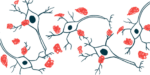
Parkinson’s is caused by the progressive loss of dopaminergic neurons, nerve cells responsible for making the brain chemical dopamine. These neurons are primarily found in a brain region called the substantia nigra and extend nerve fibers to another region known as the striatum. Together, these connections form the nigrostriatal pathway, a brain circuit that plays a key role in controlling movement.
Investigating the psychedelic compound DMT
As these neurons and their connections are lost, dopamine levels in the striatum fall, giving rise to the hallmark motor symptoms of Parkinson’s. People with the neurological disease can also experience a range of nonmotor symptoms, including cognitive problems.
Several processes are thought to contribute to dopaminergic neuron loss, including chronic neuroinflammation. Persistent activation of microglia and astrocytes — cells that support and protect the nervous system — can release inflammatory molecules that cause further neuronal damage.
Available treatments for Parkinson’s mainly help manage symptoms and do not slow or stop the underlying neurodegenerative process. That has prompted researchers to look for compounds that could protect dopaminergic neurons or reduce harmful inflammation.
One candidate is DMT, a naturally occurring psychedelic compound used in ayahuasca, a brownish-red drink developed in South America. DMT acts on several receptors, including the 5-HT2A serotonin receptor, which mediates its psychedelic effects, and S1R, which has been linked to neuroprotective and anti-inflammatory effects.
Now, a team of researchers from Madrid set out to investigate whether DMT could protect dopaminergic neurons and reduce inflammation in cellular and mouse models of Parkinson’s. The scientists also sought to determine if any such effects would involve S1R or 5-HT2A signaling.
The team first tested DMT in human SH-SY5Y cells, a neuronal cell line, which were exposed to 6-hydroxydopamine (6-OHDA), a toxin widely used to induce dopaminergic neuronal damage.
DMT partially protected the cells from 6-OHDA toxicity, restoring cell viability by about 40% and reducing markers of programmed cell death. It also lowered levels of molecules associated with inflammation, according to the researchers.
Similar anti-inflammatory effects were seen in lab-grown microglia and astrocytes — star-shaped cells that provide energy and support to neurons — from mice exposed to an inflammatory stimulus. The researchers found that DMT reduced the production of several inflammatory molecules.
In these experiments, blocking S1R prevented or substantially reduced DMT’s neuroprotective and anti-inflammatory effects, whereas blocking 5-HT2A did not. This suggested that DMT’s effects were mediated mainly through S1R rather than 5-HT2A signaling, the scientists noted.

Better motor function seen in mice treated with compound
The researchers next tested DMT in male mice, in which 6-OHDA was injected directly into one side of the substantia nigra. The toxin damages dopaminergic neurons and the nigrostriatal pathway, leading to a loss of dopamine in the striatum and reproducing some of the changes seen in Parkinson’s.
Starting three days later, the mice received DMT every other day for three weeks. DMT protected dopaminergic neurons in the substantia nigra and reduced microglial and astrocytic activation.
DMT also partially protected the nerve connections reaching the striatum and reduced damage to myelin, the protective coating around nerve fibers. Together, the findings suggested that DMT helped protect the nigrostriatal pathway from 6-OHDA-induced damage.
These findings support [this psychedelic compound] as a compelling candidate for further exploration in [Parkinson’s] therapy. … DMT holds potential not only to alleviate symptoms but also to modify disease progression.
Once again, blocking S1R largely eliminated these protective effects, while blocking 5-HT2A did not.
These changes translated into better motor function. Because 6-OHDA damaged only one side of the brain, the mice showed an abnormal turning behavior when given apomorphine, a drug that stimulates dopamine receptors. DMT markedly reduced this abnormal turning, but the benefit was lost when S1R was blocked.
Tests of spontaneous activity, learning, and memory showed no significant differences between the groups. However, the researchers noted that the mouse model itself did not reproduce the nonmotor problems seen in Parkinson’s, limiting their ability to determine whether DMT might affect these symptoms.
“These findings support DMT as a compelling candidate for further exploration in [Parkinson’s] therapy,” the researchers wrote. “By targeting both neurodegeneration and neuroinflammation, DMT holds potential not only to alleviate symptoms but also to modify disease progression.”
The team stressed that further studies are needed to validate these findings in additional preclinical models and ultimately determine whether the results can be translated to people with Parkinson’s.




Young Simon
Are there any openings in current or future research trials that use psychedelics such as DMT to treat Parkinson's motor symptoms?
Lynn Burgess
Well,I just WISH that more of us with p.d. could participate in trials. I read about all the discoveries, and then that’s the last I hear of it,!!
ea
FEEDBACK: The 'flashing' advertisements triggers confusion and difficulties in reading your articles or the ad itself. The ads are detrimental to all your efforts. Just stop the flashing and rolling and more of us will actually read this important information. Maybe even pay attention to and buy the product that is focussed more on their financial benefit than our well being.