
Gut bacteria can vary with Parkinson’s severity, age, and medications
Study findings could help guide new treatment approaches
Written by |
- Parkinson's disease is linked to specific alterations in gut bacterial communities that differ from healthy individuals.
- These microbial variations are closely associated with patient age, disease severity, and medications.
- Further research is needed to determine if gut microbiome changes directly drive symptom progression.
Changes in gut bacteria may be linked to Parkinson’s disease and can vary with age, disease severity, and medications, but more research is needed to understand whether these changes actually contribute to how symptoms develop and progress, a study suggests.
“These findings regarding the relationships between microbial communities and disease characteristics warrant further investigation and may inform the development of novel therapeutic approaches for managing Parkinson’s disease,” researchers wrote.
The study, “Gut microbial dysbiosis in a Southern Chinese cohort of patients with Parkinson’s disease,” was published in Antonie van Leeuwenhoek.

Several bacterial groups more common in patients than in controls
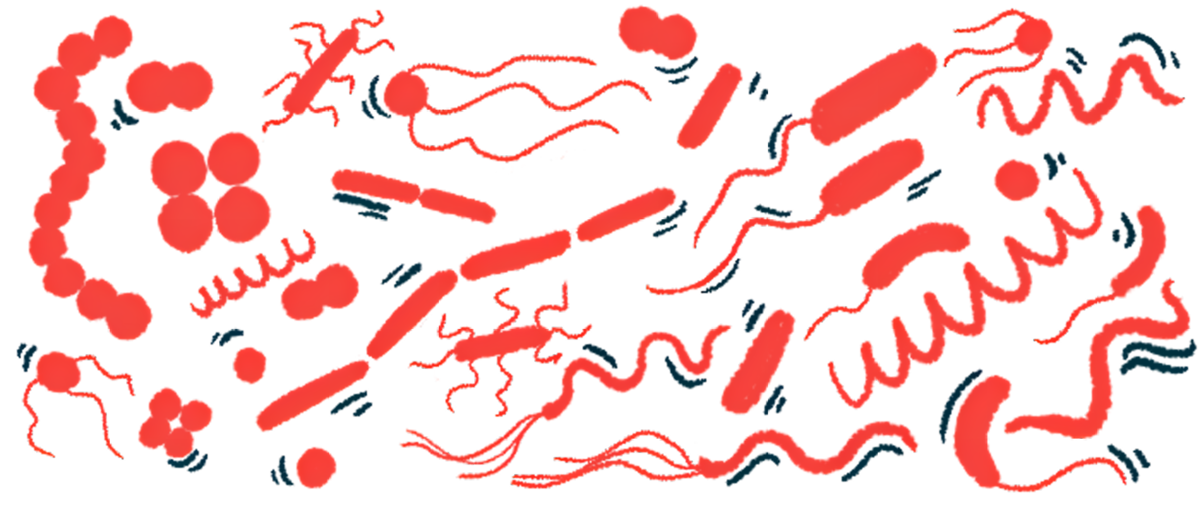
There is increasing evidence that bacteria and other microbes living in the digestive tract, called the gut microbiome, may play a role in how Parkinson’s develops and progresses. Changes in the normal balance and variety of the gut microbiome may affect the communication between the gut and the brain via the gut-brain axis.
“However, bacterial profiles can vary based on factors like diet, age, and medication use,” the researchers wrote.
To understand whether and how the gut bacteria differ in Parkinson’s when considering factors like age, disease severity, and medication usage, the researchers compared stool samples collected from 42 patients and 25 age-matched control individuals. A technique called 16S rRNA gene sequencing was used to identify and compare the bacteria in the samples. The 16S rRNA gene is a piece of genetic material that can distinguish different bacteria.
Of the 42 patients, 18 were men and 24 were women. Their mean age was 64.1 years. Most patients were taking dopamine agonists (85.7%) or levodopa (83.3%). Dopamine agonists work by mimicking dopamine, the brain chemical that is missing in Parkinson’s, while levodopa provides the body with a precursor it can convert into dopamine.
This study highlights the intricate gut microbiome-[Parkinson’s disease] relationship, suggesting potential therapeutic avenues and further research directions.
Results showed that several bacterial groups were significantly more common in patients than in control individuals, including Ruminococcaceae, Clostridiales, Alistipes, Oscillibacter, and Firmicutes. Other bacteria, including Bacteroides, Lachnospiraceae, Megamonas, and Klebsiella, were significantly more common in controls.
Among people younger than 60 years, there were few differences between groups. In people older than 60 years, however, several bacterial groups differed between those with and without Parkinson’s. Among patients, some bacteria were also more abundant in those older than 60 years or at a more advanced stage of the disease.
Anticholinergic medications, which reduce the activity of acetylcholine, a chemical that helps coordinate movement, were used by about one in every four patients (26.2%). The use of anticholinergic medications and dopamine agonists was associated with changes in bacteria such as Ruminococcaceae, Clostridiales, and Blautia.
Overall, the findings suggest that changes in the gut microbiome may occur relatively early in Parkinson’s and may be related to how severe the disease becomes. Age and medications also appear to affect the gut microbiome. This makes the relationship between Parkinson’s, medications, and gut bacteria complex.
“This study highlights the intricate gut microbiome-[Parkinson’s disease] relationship, suggesting potential therapeutic avenues and further research directions,” the researchers wrote.


Mark Peever
I am just starting so don't have any comments right now so don't have much in the way of comments.