
Sometimes being a Parkinson’s caregiver means just standing by
I wanted to help my Uncle Brandon; he wanted to show he was still capable
Written by |

I previously wrote about how Parkinson’s disease did not arrive in my life all at once, but through memory, in moments that only made sense years later, when I found myself replaying the past, trying to understand what I had missed and why it still mattered.
Caregiving, however, taught me to look forward. It showed me that Parkinson’s is not just something we recognize in hindsight. It is something we learn to live with every day. I also learned how delicate love can feel when you are trying to help someone who is still holding on to who they are.
One of my strongest memories of my Uncle Brandon, who passed away in 2012, is not from a hospital or a doctor’s office. It is in the driveway.
He was a drag racing fanatic. He owned an old-school race car that he cherished deeply. It was more than a vehicle. It was history, pride, and identity. The garage was his sanctuary, and the hood of that car was where he felt most like himself.
As Parkinson’s slowly reshaped his motor skills, he still wanted to be there, leaning over the engine, wiping grease from his hands, reaching for tools. Sometimes he asked me to pass him a wrench or a socket. Other times, he did not want my help at all. That was hard to accept at first.

Respecting what remained
I remember standing nearby, unsure of what to do, watching him struggle with tasks that once came easily. When he waved me off, I felt like a bother. Like I was in the way. I wondered why he didn’t want my help, even though it was clear things were becoming more difficult for him.
I didn’t realize then that he was not rejecting me. He was protecting himself.
I was seeing the tremor, the slowness, the moments when his hands wouldn’t cooperate. But what he was feeling was something deeper, the quiet grief of losing his independence piece by piece. That race car was one of the last places where he still felt capable, like the man he had always been. Accepting help there may have felt like surrendering something sacred.
Back then, I thought caregiving meant stepping in every time someone struggled. I believed love meant doing more, fixing more, and acting quickly. I was mistaken. What mattered was not how much I helped, but how much I respected what he could still do.
There is a delicate line between support and erasure. I did not see it at first. I only saw my own good intentions and my desire to lighten his daily load. Parkinson’s was already taking so much from him. My eagerness to help, though rooted in love, sometimes threatened the last spaces where he still felt whole.
I learned that caregiving is not about control. It is about humility. It is about knowing when to hold a hand and when to let go. It is about realizing that dignity is simply not a luxury. It is a necessity.
Standing nearby
There were days when I left him feeling emotionally heavy, not knowing how to name why. I did not yet understand that I was grieving someone who was still here. I did not know it was possible to feel loss in slow motion, in inches instead of miles.
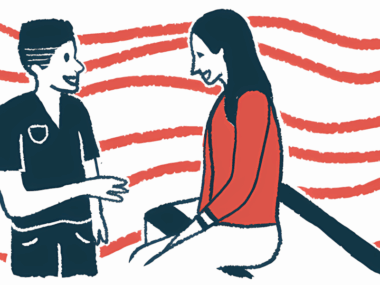
Over time, my perspective changed. I stopped trying to manage every moment and started listening more. When I learned to stand beside him instead of over him, he could relax and return to what he loved.
Brandon may be gone, but the lessons he taught are still with me. When I picture him under the hood of that car, focused and determined, I remember that identity does not vanish with illness. It changes. It holds on. It survives.
Living alongside Parkinson’s often places people on a road without a map. Spouses, children, siblings, and friends each carry their own version of this quiet weight. The confusion, the guilt, the exhaustion, and the love all belong to this shared experience.
If you are in the thick of caregiving, unsure of when to step in or step back, remember these two things. The first one is that your presence matters. The second: You don’t have to get it right every time. Sometimes, care is as meaningful as standing nearby, holding the tool, waiting to be invited in, and keeping the moment authentic.
Note: Parkinson’s News Today is strictly a news and information website about the disease. It does not provide medical advice, diagnosis, or treatment. This content is not intended to be a substitute for professional medical advice, diagnosis, or treatment. Always seek the advice of your physician or another qualified health provider with any questions you may have regarding a medical condition. Never disregard professional medical advice or delay in seeking it because of something you have read on this website. The opinions expressed in this column are not those of Parkinson’s News Today or its parent company, Bionews, and are intended to spark discussion about issues pertaining to Parkinson’s disease.

Jane E Wolf
This writing was SO SO good! A great reminder to me… thank you!!
Crystal Onyema
Thank you so much! Messages like this are such a reminder of how strong and supportive this community is. None of us are walking this journey alone.
Cathy Marie Daumen
This is one of the best articles I've ever read Participation with Parkinson's it's hard to tell people who love you what's going on in your brain And this really helps I belong to a support group and I plan to copy this if you don't mind and hand out copies to all the people so they can read I think the most important thing is that the caregivers struggle so hard to understand and to give love and accept love and not feel rejected I hear that all the time from them and never know what to say Your article is really insightful thank you for writing it