
Free-water MRI builds more complete picture for Parkinson’s diagnosis
Combining the scan with biomarker tests uncovers critical brain changes
Written by |

- Free-water MRI improves Parkinson's disease diagnosis accuracy.
- It detects subtle brain changes, even with negative alpha-synuclein tests.
- Combining MRI with molecular tests offers a more complete disease assessment.
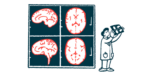
Neuropacs’ Automated Imaging Differentiation of Parkinsonism (AIDP) software accurately detected brain changes related to Parkinson’s disease across different patient groups, including some who tested negative on standard alpha-synuclein biomarker tests, a new study has found.
The software uses a specialized MRI technique called free-water imaging. These new findings suggest that brain imaging and molecular testing capture different aspects of Parkinson’s disease, suggesting they could work together to provide more accurate diagnosis and monitoring.
Free-water imaging detects subtle changes in water movement between brain cells that can reflect inflammation, tissue damage, or nerve cell loss before these changes become apparent on conventional MRI scans.
The study was conducted in collaboration among the University of Florida, Mayo Clinic, Vanderbilt University, and the Parkinson’s Precision Medicine Initiative (PPMI). The results were described in a study, “Diffusion MRI and α-Synuclein Seed Amplification Status in Parkinson’s Disease,” published in Annals of Neurology.
Software approval and early detection
Neuropacs’ AIDP software has received de novo classification from the U.S. Food and Drug Administration, enabling its clinical use in the U.S.
“Positive alpha-synuclein SAA confirms the underlying disease biology of Parkinson’s disease, but our findings show it did not strongly predict widespread microstructural brain changes on free-water imaging,” David Vaillancourt, PhD, the study’s co-author and Neuropac’s co‑founder and chief scientific officer, said in a company press release. “This suggests that molecular and imaging markers may be capturing different dimensions of the disease, and both may be needed for a complete picture in early [Parkinson’s disease].”
A hallmark of Parkinson’s is the formation of toxic clumps of misfolded alpha-synuclein protein in nerve cells that spread in a prion-like way, meaning clumps in one brain region can trigger the formation of more clumps in other brain parts. This is believed to contribute to the loss of nerve cells, particularly dopamine-producing neurons, and to disease progression.
The alpha-synuclein seed amplification assay (SAA) is a promising diagnostic tool for Parkinson’s disease and other conditions characterized by alpha-synuclein clumping. The test accurately detects the presence of aggregated alpha-synuclein in cerebrospinal fluid, which surrounds the brain and spinal cord, and in the blood.
Comparing imaging and biological markers
However, according to the researchers, it is unclear whether SAA positivity corresponds to patterns of nerve degeneration visible by imaging. To learn more, researchers used data from 462 PPMI participants diagnosed with Parkinson’s to compare advanced MRI data between those who tested positive (421 patients) or negative (41 patients) in the alpha-synuclein SAA test.
Participants in PPMI were mainly diagnosed based on clinical symptoms and abnormal DaT-SPECT, a brain scan used to visualize dopamine-producing neurons. They had a mean age of 63 to 65, and most were men. They were diagnosed with Parkinson’s for a mean of 10 months before imaging, and had a mean duration of motor symptoms of 2.4 and 3.4 years for those with SAA-positive and SAA-negative tests, respectively.
AIDP identified 427 participants as having imaging patterns consistent with Parkinson’s, which included 391 SAA-positive and 36 SAA-negative patients.
The remaining 35 participants, including 30 who were SAA-positive, had an atypical parkinsonism pattern. The software predicted these cases as multiple system atrophy (16 SAA-positive and three SAA-negative) and progressive supranuclear palsy (14 SAA-positive and two SAA-negative).
Researchers also identified significant differences between SAA-positive and SAA-negative patients in a brain region implicated in Parkinson’s called the superior cerebellar peduncle. This region consists of a bundle of nerve fibers that connects the cerebellum, the part of the brain involved in motor control. No significant differences were found in other MRI measures across the brain.
“These findings have important implications for how clinicians and researchers evaluate patients with Parkinson’s disease,” said Shannon Chiu, MD, lead author of the study and neurologist at Mayo Clinic College of Medicine. “Because molecular confirmation of [alpha]-synuclein aggregation and diffusion MRI appear to reflect different aspects of neurodegeneration, using both types of biomarkers together may provide a more comprehensive assessment of disease status.”
The researchers noted that more longitudinal studies will be important to determine whether people with Parkinson’s and SAA-positive or negative status represent biologically and clinically distinct trajectories.




jim JAMES MOORE
i would to be tested what process do i have to go through