
Amprion working to expand access globally to alpha-synuclein protein test
Company partnering with Australian university on diagnostic test for Parkinson's
Written by |

- Amprion is working to expand access globally to its SAAmplify–alphaSYN test for detecting abnormal alpha-synuclein protein.
- The test aids in the early diagnosis of Parkinson's and related neurodegenerative diseases.
- The company is beginning its efforts in Australia in a partnership with Macquarie University.
Amprion is partnering with Macquarie University in Australia to expand access to its SAAmplify-alphaSYN test, which detects abnormal alpha-synuclein protein in people with suspected neurodegenerative diseases.
The test can help diagnose Parkinson’s disease early, as well as help identify specific types of atypical parkinsonism, such as dementia with Lewy bodies (DLB) or Alzheimer’s with Lewy bodies.
Clinical data have shown it can accurately detect Parkinson’s, both in individuals with symptoms as well as those with prodromal disease — meaning, before symptoms typically develop.
The collaboration marks the first step in the company’s efforts toward international expansion, and aims to support research and clinical initiatives seeking to advance understanding and detection of neurodegenerative diseases.
“Macquarie University’s leadership in neurodegenerative disease research … makes it a strong partner in advancing this technology,” Russ Lebovitz, MD, PhD, CEO and cofounder of Amprion, said in a company press release announcing the collaboration.
“Establishing Australia’s first alpha-synuclein seed amplification testing site is an important step in expanding global access to more precise diagnostic tools,” Lebovitz said.

Amprion is also working to increase its global intellectual property protection for the test, with the recent addition of patent protection in China. The company holds patents across multiple regions, from Australia, Europe, and Asia to Mexico. It’s also working to expand the test’s use by partnering with hospitals in Europe, South Korea, and China.
Additionally, Amprion this year will continue collaborating with The Michael J. Fox Foundation for Parkinson’s Research (MJFF) on several initiatives. In particular, the SAAmplify-alphaSYN test is part of the ongoing Parkinson’s Progression Markers Initiative (PPMI), which aims to identify biomarkers of Parkinson’s onset and progression.
Alpha-synuclein test uses fluorescent dye to mark abnormal protein
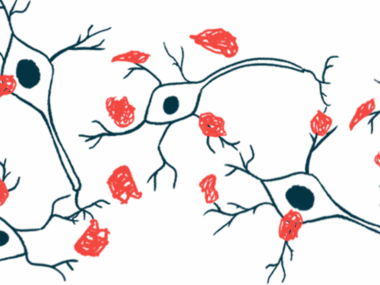
Parkinson’s is caused by the progressive loss of nerve cells that produce dopamine, a signaling molecule involved in motor control. A hallmark feature of the disease is the formation of abnormal protein clumps mainly composed of misfolded alpha-synuclein, called Lewy bodies.
Such clumps are toxic to nerve cells and spread in the brain in a prion-like manner, meaning that protein clumps in a brain region can trigger the formation of more clumps in nearby regions.
The SAAmplify-alphaSYN test uses a sample of cerebrospinal fluid (CSF), the liquid that surrounds the brain and spinal cord, to detect misfolded alpha-synuclein. If present, abnormal alpha-synuclein will trigger the clumping of normal protein in the test environment.
The newly formed aggregates incorporate a fluorescent dye that emits a detectable signal, yielding a detected or not detected result.
The test became commercially available in the U.S. in 2021 under the name SYNTap, and its rebranded version, SAAmplify, was launched in 2024. Its use was expanded last year in a collaboration between Mayo Clinic Laboratories and Amprion.
According to the company, integrating the assay into clinical workflows may help detect synucleinopathies, allowing for early intervention and improving clinical trial design.



Liam
Hi. I appreciate all of your reporting on PD. I note that you mostly cover new methods of detection. As a PD sufferer, it would be especially helpful if you covered more news about possibly curing or at least slowing PD progression. For those of us who already know we have PD (the old news) new news would inspire more hope.
Thanks
Liam