
Challenges of dating with Parkinson’s are worth it, I’ve found
My relationship doesn't have to be defined by a diagnosis
Written by |
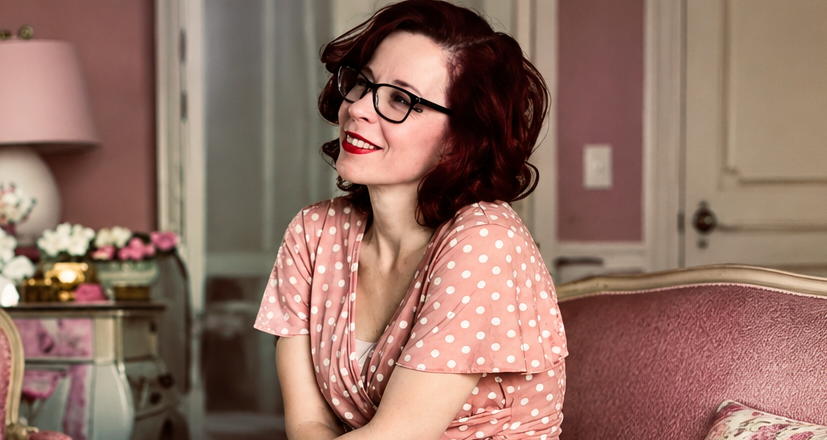
Mel Livingston co-hosts the "Parkinson’s Looks Like Me" podcast. (Courtesy of Mel Livingston)
Dating and Parkinson’s sounds a bit like an oxymoron, right?
Yet there I was, at 45, trying to do exactly that.
Forget that my life was already complicated by the fact that I was not only single, but an only parent of two young girls, each navigating their own challenges with social anxiety and autism. I had also been diagnosed with young-onset Parkinson’s disease earlier that year.
We had been talking for weeks. School schedules, COVID-19 restrictions, snow closings, and general life had created havoc with our plans, so that by the time we were finally able to get together — which meant an hour’s drive for each of us — I was feeling terribly guilty about not having unveiled the elephant in the room.
Keeping my diagnosis a secret felt increasingly uncomfortable, so I decided that if it felt right within the conversation, I would tell him on what would be our first date after nearly six weeks of talking.
His reaction? He was nonplussed.
He asked thoughtful, insightful questions about how Parkinson’s affected me, how I felt about the diagnosis, and then ended with four words that, five years later, still light me up:
“How can I help?”
Taking a calculated risk
What I learned about dating with Parkinson’s is that there really is no right time to tell someone. There is only the time that feels right for you. Just like everything else in life after diagnosis, you have to take your chances. I call it a calculated risk.
Some people will walk away. Some will stay, and honestly, the same is true of almost every person we encounter after a diagnosis like this. We don’t get to control who stays. We only get to decide how honestly we show up.
Still have questions? Continue the conversation with Mel and two others with PMD Alliance during our AMA Forum event Sept. 21-24. Register today.
I learned to focus on the relationship and not let Parkinson’s have a starring role. Yes, we have to plan a little more than most couples if we want to go out without it taking a toll on my body.
Medication timing matters. Energy matters. Rest matters. Sometimes the restaurant menu we want to go to simply isn’t going to work with slow digestion. So we plan, and then we go. Just like everyone else.
Occasionally, it works out better than we imagined. Other times, it goes wildly in the opposite direction, and we pivot — because that’s just life.
Lucky for me, I met someone who is not only a great planner but also loves spreadsheets. Honestly, Parkinson’s may have met its match!
Parkinson’s is only one part of me
But dating also helped me remember something incredibly important: My illness is only one part of me. It is not the total of what I bring into a relationship.
Our value does not diminish because we have a diagnosis. We don’t have to introduce ourselves with, “Hi, I’m Melissa, and I have Parkinson’s.”
We are still us. We are still allowed to have standards. We are still allowed to want chemistry, great sex, someone who makes our heart race, and our stomach flip.
We are still allowed to be pursued, desired, adored, and occasionally completely swept off our feet.
And we absolutely do not have to settle for less — or be grateful for anyone willing to date us simply because we have a chronic illness.
While a partner may eventually find themselves in a caregiver role, that does not mean they are wholly responsible for keeping us functioning.
A healthy relationship isn’t about one person becoming responsible for the other. It’s about two people figuring out how to build a life that makes room for reality — learning when to push forward and when to rest. Making time for each other, while still making time for yourselves. Giving each other grace.
Because maybe dating with Parkinson’s isn’t about finding someone who promises, “I’ll never leave when things get hard.”
Maybe it’s about finding someone who looks at the hard things objectively and says, “How can I help?”
That’s the kind of love I’m interested in. It’s possible. And after five years, I can tell you this:
It’s worth taking the calculated risk.
This article was provided by our partner, PMD Alliance. It has been reviewed by Bionews for accuracy and relevance. The views and opinions expressed are those of the author and do not necessarily reflect the views of Bionews or Parkinson’s News Today.




Leave a comment
Fill in the required fields to post. Your email address will not be published.