SCAN brain network may offer new treatment target in Parkinson’s
Study links abnormal brain connectivity to movement symptoms in Parkinson’s
Written by |
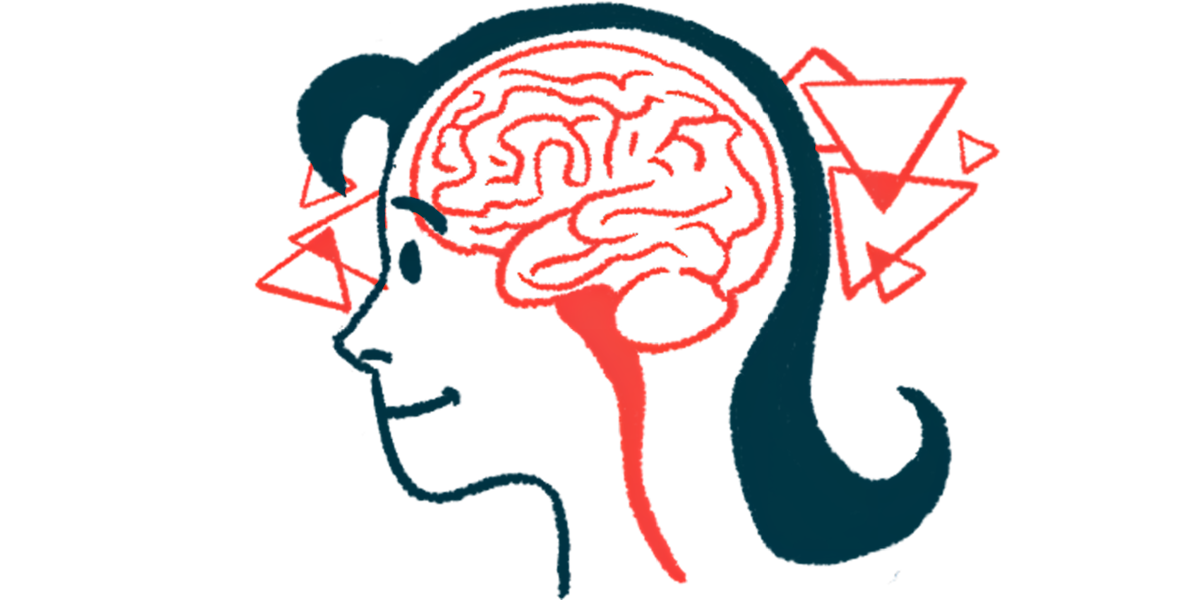
- Parkinson’s motor symptoms are linked to dysfunction in the brain’s SCAN network.
- Increased SCAN connectivity to nearby brain regions is linked to these symptoms.
- Targeting SCAN with therapies like TMS may help ease Parkinson's motor symptoms.




Targeting a brain network that links thinking and movement may be an effective treatment strategy for easing motor symptoms in people with Parkinson’s disease.
The somato-cognitive action network (SCAN) lies within the motor cortex, a brain region that controls body movements. In Parkinson’s, SCAN dysfunction, particularly increased connectivity between SCAN and subcortical regions, has been linked to hallmark symptoms of the disease.
“This work demonstrates that Parkinson’s is a SCAN disorder, and the data strongly suggest that if you target the SCAN in a personalized, precise manner you can treat Parkinson’s more successfully than was previously possible,” Nico U. Dosenbach, MD, PhD, professor at Washington University Medicine and co-author of the study, said in a university news story. “Changing the activity within SCAN could slow or reverse the progression of the disease, not just treat the symptoms.”
The study, “Parkinson’s disease as a somato-cognitive action network disorder,” was published in Nature.

How Parkinson’s disease affects the brain and movement
Parkinson’s disease is caused by the progressive loss of dopaminergic neurons, nerve cells that produce dopamine, which are primarily found in a brain region called the substantia nigra. The loss of dopamine signaling drives the disease’s motor symptoms, including tremors, rigidity, and slowed movements.
Because Parkinson’s affects movement as well as thinking and motivation, researchers have struggled to explain all symptoms using only traditional motor brain regions that control body parts such as the feet, hands, and mouth.
In this study, a research team led by China’s Changping Laboratory, working with U.S. universities, explored whether SCAN could help explain Parkinson’s symptoms and serve as a potential therapeutic target.
They collected brain imaging data from more than 800 participants in the U.S. and China. This included patients with Parkinson’s who were receiving deep brain stimulation (DBS) or non-invasive treatments, such as using magnetic fields or sound waves to modulate brain activity, or medication. Healthy individuals and patients with other movement disorders were included as controls.
The analysis revealed that connectivity between the SCAN and the subcortex — deep brain regions involved in emotion, memory, and motor control — was significantly higher in people with Parkinson’s than in healthy individuals.
“Our work shows that the disease is rooted in a much broader network dysfunction. The SCAN is hyperconnected to key regions associated with Parkinson’s disease, and this abnormal wiring disrupts not only movement but also related cognitive and bodily functions,” said Hesheng Liu, PhD, the study’s senior author.
Exploring brain stimulation as a potential treatment approach
The team then used transcranial magnetic stimulation (TMS) – a non-invasive technique that uses a device placed on the head to send magnetic pulses that change brain activity — to modulate SCAN connectivity.
Overall, 36 patients were assigned to receive intermittent TMS for two weeks, targeting either the SCAN or adjacent brain areas. Both groups showed significant improvements in motor symptoms, reflected by reductions in the Movement Disorder Society-Unified Parkinson’s Disease Rating Scale (MDS-UPDRS) part III scores compared with baseline. However, the SCAN-targeted group showed significantly greater symptom improvement after one and two weeks, along with faster symptom relief.
Patients who received SCAN-targeted TMS showed a 56% response rate, compared with 22% in those receiving stimulation in other brain areas. This corresponded to a 2.5-fold increase in efficacy when targeting SCAN.
“Nevertheless, the therapeutic potential of SCAN-targeted [TMS in Parkinson’s], as suggested by this small, single-centre study, should be further tested in larger, multicentre trials,” the researchers wrote.
The team is preparing clinical trials with Turing Medical, a Washington University startup co-founded by Dosenbach, to evaluate a non-invasive therapy for gait dysfunction in people with Parkinson’s. The approach uses surface electrode strips placed over SCAN regions. Dosenbach also plans to explore modifying SCAN activity using low-intensity focused ultrasound, a non-invasive technique that changes brain activity using sound energy.