
There are many ways to get a backache. This is new for me — lower back pain that leads to spasms and literally drives me to my knees. It doesn’t feel like the pain from overdoing it in the garden. Every gardener knows that exquisite twinge from too much lifting…
Possibilities With Parkinson’s — Dr. C
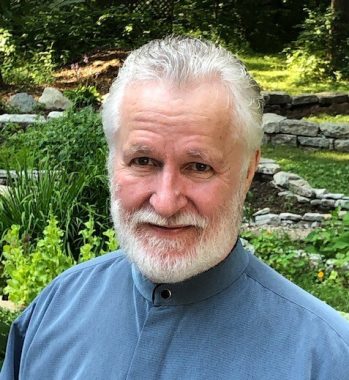
Dr. C is the familiar pseudonym for readers who visit “Possibilities with Parkinson’s.” The love of writing has spanned his careers as a research theoretician, brain rehabilitation clinician, and college professor. Dr. C was first diagnosed with early-stage Parkinson’s disease in 2014. His interest in how Parkinson’s disease can manifest itself in other body and mind symptoms has become a focused area for his research and writing. His goal is to share current medical research on how Parkinson’s can be diagnosed in early stages, and to help other early-stage Parkinson’s patients manage their disease process in a holistic healing approach.
Featured Post
You can’t walk around with a doctor in one pocket and a therapist in the other. In fact, you can’t even walk around with your hands in your pockets if you have Parkinson’s disease because you need them to prevent you from bumping into things and falling. Nobody…
I lost most of my vision two years ago and became legally blind. It was devastating. Through the course of rehabilitation with a low vision clinic, I was taught how to see in a very new way, called eccentric viewing. Eccentric viewing is a method by which a…
Some people go on vacations to play. For me, play is when I’m creating: writing columns, building garden landscapes, and being of service. Living with a chronic illness can be overwhelming. It helps to have a healthy sense of play, a playful mind, a lightness of being. Being a…
It’s the hand I have been dealt: Parkinson’s for the rest of my life. The good news is I have lucid days. With the right tools, I can remain a productive member of society and a minimal burden on family. I maintain a mental image, my “well of resources,” throughout…
Sometimes, the call of nature is a daily dash to the bathroom. At least it used to be for me. I had a regular routine — until Parkinson’s disease came along. Now, I don’t sense “having to go” in the same way. Days will go by without a visit to…
Before I was diagnosed with Parkinson’s disease seven years ago, I hadn’t heard the term “off periods.” After getting involved in the Parkinson’s community, I discovered that the term is frequently used. One reader asked, “Why do my symptoms get so bad in the early evening?” My response was,…
Many of us with Parkinson’s disease experience a shift from our former persona to our new self. Some readers have reported that they can no longer do what they once used to do. Some lost attributes are physical — we can’t walk as far as we used to or participate…
Many writers offering chronic disease management tips suggest establishing a routine. Doing this while battling a chronic illness is no easy task. It used to be that I could push myself hard to get something done, and all I would feel afterward is tired. Now when I push like that,…
My life with Parkinson’s disease is so strange that I sometimes feel as if I don’t know my own self anymore. I have a runny nose that isn’t attributable to allergies or viruses. Rather, it’s a dysregulation effect of the disease. I feel sadness that…
Even after years of practicing the Parkinson’s disease self-management program I initiated and developed, which I call “TBM,” I still experience suffering in the form of intense pain, brain fog, and emotionally turbulent days. Still, I must face the beast. It’s a chaotic experience, difficult to translate, and not…
As this chronic illness progression continues to steal away functioning, I need more support. When I previously wrote about the excellent role Mrs. Dr. C plays within the support partnership, a reader asked, “How do I get me a Mrs. Dr. C relationship?” I didn’t reply at the time.
“Good morning, Mrs. Dr. C,” says Neo, Dr. C’s imaginary talking neocortex and a frequent guest of this column. “Are you excited about the new year?” “I think so, but last year was a challenge for Dr. C. and me,” Mrs. Dr. C replies. “How so?” Neo asks. “Isn’t Dr.
To My Neurologist: In an article published at KevinMD.com, authors of a study on the experience of Parkinson’s care partners suggest that asking a patient or care partner to write a letter — instead of relying solely on verbal conversation — illuminates new aspects of the physician-patient-family relationship.
Since being diagnosed with Parkinson’s disease (PD) in 2014, I’ve been on a quest to discover scientifically validated tools that will enable me to live better with this disabling disease. My name for this toolbox, my Parkinson’s self-management program, is TBM. “T” is for threshold management, “B” is for…
To live better with Parkinson’s disease, I had to relearn how to walk – “performing” while using mindful movements instead of absent-minded walking. I had to relearn how to talk, being mindful of volume, projection, and using lots of “pause between” to clarify my thoughts before blurting. I…
The “pause between” is my new Parkinson’s self-management tool. I use it every day to help me switch from old ways of reacting to the “flicker effect” (dysregulated systems). It provides improved threshold management and mindful movements, which make life easier. The old ways are like a paved…
Explore More Columns
 Discussion
 Discussion
 Discussion