
Tai Chi may ease Parkinson’s motor symptoms, improve physical function
Small trial finds Tai Chi and resistance-stretching offer different benefits
Written by |
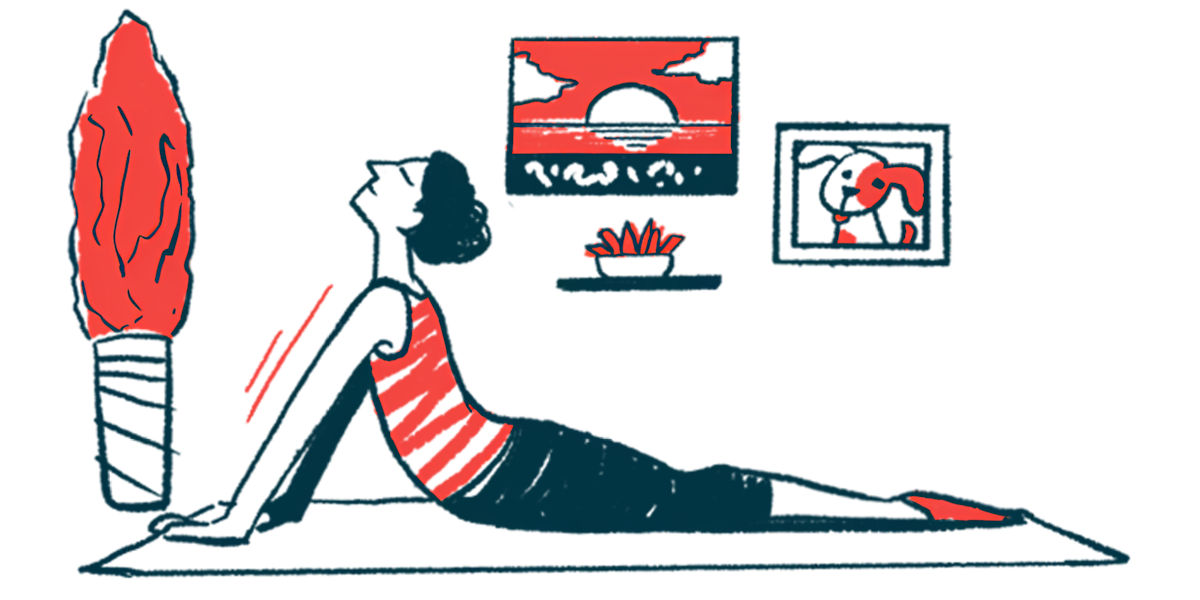
- Tai Chi may improve motor symptoms, physical function, and quality of life in early to mid-stage Parkinson’s disease.
- Tai Chi appeared particularly beneficial for motor control, balance, and muscular endurance.
- Findings support tailoring exercise programs to patients’ specific rehabilitation needs.
Practicing Tai Chi four times a week may lessen motor symptoms and improve physical function and quality of life in people with early- to mid-stage Parkinson’s disease, a small clinical trial found.
A program combining resistance and stretching exercises produced similar overall improvements in motor symptoms, but each approach appeared to have different strengths. Tai Chi appeared to have relatively greater benefits for muscular endurance, motor control, and balance, while resistance-stretching exercise showed more consistent effects on strength, mobility, and functional performance.
“These findings highlight the value of tailoring exercise interventions to individual rehabilitation needs,” the researchers wrote.

Exercise may help fill treatment gaps in Parkinson’s
The study, “Effects of Tai Chi on core motor symptoms in patients with Parkinson’s disease: A three-armed randomized controlled trial,” was published in the journal Behavioural Brain Research.
Parkinson’s is caused by the progressive loss of nerve cells that produce dopamine, a chemical messenger that helps control movement. Motor symptoms can include slowness of movement, muscle rigidity, tremor, balance problems, and difficulty walking.
While current treatments, such as levodopa, can ease several motor symptoms, they may be less effective for balance, posture, and other symptoms involving the body’s central axis. Exercise and rehabilitation can therefore be used alongside medication to help preserve mobility and independence.
Tai Chi is a mind-body exercise that combines slow, coordinated movements, controlled weight shifting, and attention to posture. Resistance exercises work muscles against a load to build strength, while stretching helps improve flexibility and range of motion.
Despite growing support for exercise-based rehabilitation in Parkinson’s, most studies have examined one type of exercise at a time, with few directly comparing Tai Chi and combined resistance-stretching exercise. Whether different forms of exercise affect specific motor symptoms differently also remains unclear.
With this in mind, researchers in China conducted a small, prospective, randomized pilot trial involving 45 adults ages 45 to 75 with early- to mid-stage disease. All could stand and walk independently, with or without an assistive device, and had been taking a stable medication regimen for at least a month.
Trial compares Tai Chi with resistance-stretching exercise
Participants were randomly assigned to one of three groups of 15: Tai Chi, combined resistance-stretching exercise, or a control group that continued routine care and received health education.
Both exercise programs lasted 14 weeks, with four one-hour sessions each week. The first 10 sessions were conducted in person so participants could learn the movements correctly and safely. After that, participants had one supervised in-person session and three online sessions each week.
Those in the Tai Chi group learned eight postures focused on slow movements, balance, coordination, and mindfulness. The resistance-stretching program combined static and dynamic stretches with light resistance exercises designed to improve strength, flexibility, and joint stability.
The study’s main goal was to assess changes in motor symptoms using Part III of the Unified Parkinson’s Disease Rating Scale (UPDRS-III). Lower scores indicate less severe movement problems.
Participants also completed tests of balance, mobility, grip strength, arm and leg endurance, quality of life, and freezing of gait. All assessments were performed after participants had gone without their Parkinson’s medications for at least 12 hours, helping minimize the medications’ immediate effects on movement.
After 14 weeks, average UPDRS-III scores fell by four points in the Tai Chi group and by 3.24 points in the resistance-stretching group, indicating improvements in motor symptoms. In the control group, scores increased by 4.24 points, indicating worsening motor symptoms. The improvements in both exercise groups fell within a previously established range of about 2.5 to 5 points considered potentially meaningful for people with Parkinson’s, the researchers noted.
Secondary, exploratory analyses suggested that both exercise approaches were associated with improvements in several specific motor areas, including rigidity and certain hand movements. Tai Chi appeared to have relatively greater effects on motor control, coordination, and endurance-related performance, while resistance-stretching exercise showed more consistent effects on mobility and strength.
Exercise approaches show different physical-function strengths
On physical-function testing, the resistance-stretching group performed better than the control group on the Timed Up and Go mobility test, forward reach, and grip strength. On the 30-second chair-stand test, Tai Chi performed better than the control group, while the difference between resistance-stretching and control was not significant. Both exercise groups also performed better than controls on the 30-second arm-curl test.
Both programs were also associated with better overall scores on a Parkinson’s-specific quality-of-life questionnaire. Tai Chi showed a significant benefit in its mobility section, and both groups performed better than controls in areas related to daily activities and nonmotor aspects of quality of life.
Neither form of exercise significantly changed freezing-of-gait questionnaire scores. The researchers said this could reflect the relatively low prevalence of freezing at the study’s start, the participants’ disease stages, or the limited ability of questionnaires to detect changes in an intermittent symptom.
No serious adverse events occurred. A small number of participants reported mild, temporary musculoskeletal discomfort, but none needed to stop the exercise program because of it.
Overall, “Both Tai Chi and combined resistance-stretching effectively improved core motor symptoms,” the researchers wrote, adding that the changes suggested potential clinical relevance and improvements in physical function and quality of life.
Among the study limitations were the small number of participants and the lack of long-term follow-up to determine whether the improvements persisted. Several participants also dropped out for reasons related to the COVID-19 pandemic, which the researchers said could affect the reliability of estimates involving missing data.
Despite these limitations, the early findings suggest that, for people with early to mid-stage Parkinson’s, “Tai Chi may be particularly beneficial for motor control and balance, whereas combined resistance-stretching exercise may better enhance muscle strength and functional performance.”


Kat
I’m amazed ( SURPRISED) that there ISN’T Tia Chi print- outs for Our Loved Ones STRUGGLING with this HORRIBLE Disease. … SO DISAPPOINTING ….
Andy Thorsson
What were the 8 Tai chi postures used?