
Potential Parkinson’s Vaccine, Affitope PD01A, Safe and Possibly Effective in Long-term, Phase 1 Trial Series Finds
Written by |
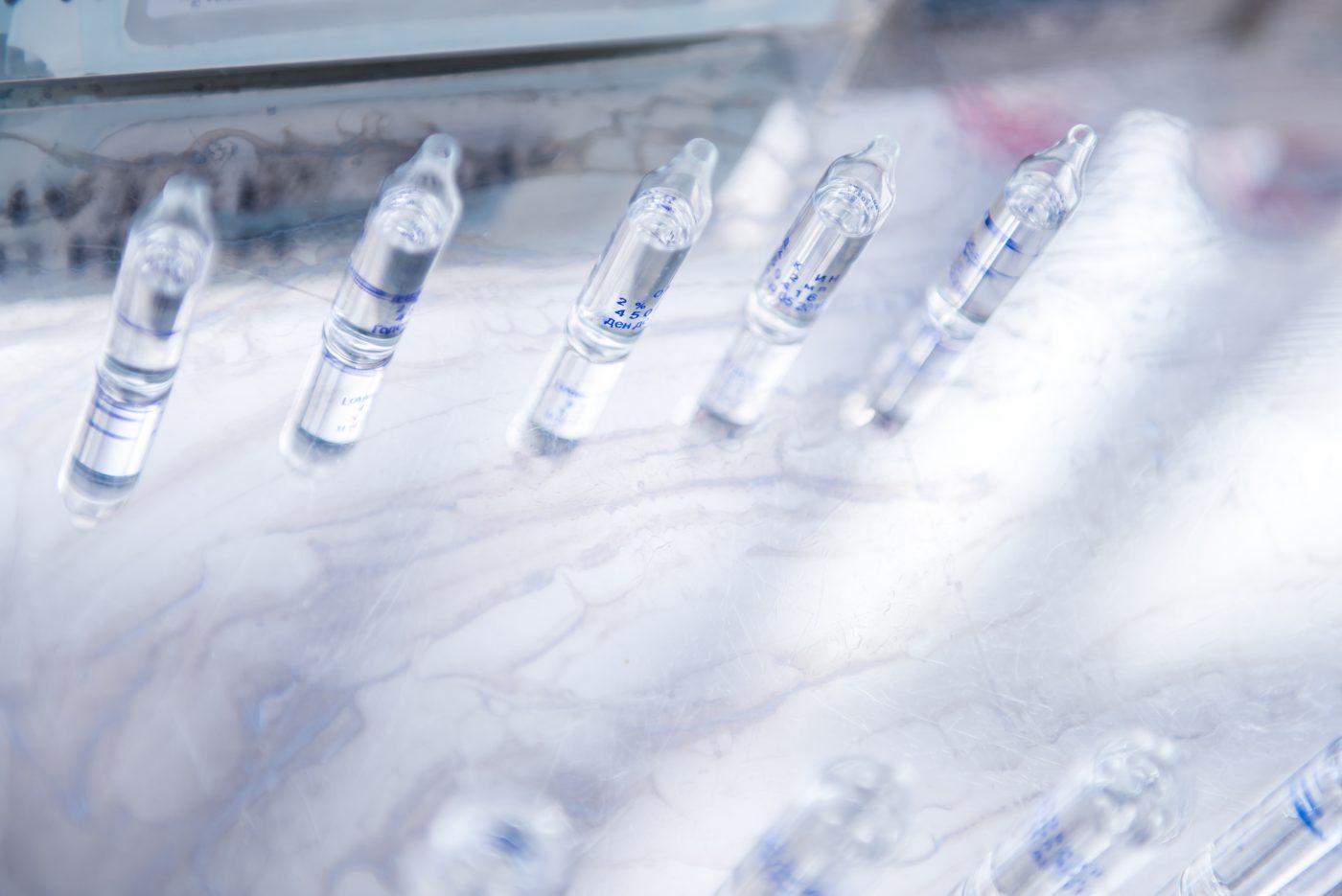
Affiris’ experimental Parkinson’s vaccine, Affitope PD01A, is safe and effectively triggers an immune response against the alpha-synuclein (aSyn) protein, data from a series of four consecutive clinical trials show.
Results from the so-called AFF008 study program were recently presented at the Advances in Alzheimer’s and Parkinson’s Therapies Focus Meeting (AAT-AD/PD) in Torino, Italy, by Werner Poewe, chairman of the Department of Neurology at the Medical University Innsbruck, Austria.
Alpha-synuclein accumulation in nerve cells of the brain leads to the formation of Lewy bodies, spherical masses that replace other cell components. Lewy bodies are thought to underly Parkinson’s symptoms and progression. Therapeutic strategies to reduce alpha-synuclein are expected to beneficially alter the course of this disease.
Affitope PD01A is an experimental vaccine — a synthetic aSyn-mimicking peptide based on Affiris’ Affitome technology — that targets alpha-synuclein by inducing an immune response that generates antibodies specifically against it.
As such, Affitope PD01A has the potential to modify disease progression.
The long-term safety, tolerability, and immune response of Affitope PD01A was evaluated in a series of Phase 1 clinical studies: AFF008 (NCT01568099), AFF008E (NCT01885494), AFF008A (NCT02216188) and AFF008AA (NCT02618941).
The initial AFF008 study, a single-site trial in Vienna, enrolled 32 patients with early Parkinson’s disease. Twenty-four were randomized to receive four subcutaneous (under the skin) injections of Affitope PD01A at one of two doses — 15 μg or 75 μg of Affitope PD01A, once every four weeks for one year in addition to standard treatment. The remaining eight patients remained on standard of care as a comparative control group.
An extension study (AFF008E) then followed AFF008 participants for an additional year with no further investigative treatment. In the AFF008A trial, treated patients were randomized again to receive a single Affitope PD01A injection at either of the two doses to “boost” their immune reaction.
About one year after this “boost,” patients in the treatment groups received a second “boost” — a single injection of 75 μg Affitope PD01A (AFF008AA study). In total, 21 treated and five control group patients completed the entire series of studies.
Data showed that both doses of Affitope PD01A were well-tolerated, with no treatment-associated adverse events other than injection-site reactions, which were considered mild and to have no relation to the administered dose.
Affitope PD01A induced a clear immune response against the peptide itself over time, which effectively translated into an antibody immune response against alpha-synuclein. The first “boost” injection induced a significant increase in the production of specific antibodies, while the second “boost” further stabilized those levels, the researchers reported.
Affitope PD01A-specific antibodies were detected in the cerebrospinal fluid, and at week 26 of treatment there was a trend toward lower levels of oligomeric alpha-synuclein (believed to be one of the most toxic forms of the protein), both in the blood and cerebrospinal fluid of treated patients.
“Immunogenicity results after 4 years of treatment are encouraging and support the hypothesis that long-term disease management by targeting aSyn … with active immunotherapy seems to be feasible,” Poewe said in a press release.
Oliver Siegel, CEO of Affiris, said researchers have further “optimized the formulation of PD01 and immunization schedule … to improve immunogenicity.”
Although tests included in the AFF008 study series did not show changes in Parkinson’s symptoms with Affitope PD01A treatment, the study was not designed or powered to evaluate its clinical benefit. “Future trials should focus on how to translate the immune response seen in these series of studies into clinical efficacy,” Poewe said.
These studies were funded by a series of grants from The Michael J. Fox Foundation for Parkinson’s Research and from the government agency AWS in Austria.




Dale Beldin
What is being done, or can be done, to make this vaccine available for patients in the USA?
David
Agree, please address this point.
Nancy Orr
Is it possible to get this vaccine ?
Maurizio Caldini
E'prevedibile un futuro uso su larga scala dei vaccini in sperimentazione? E' possibile fare una previsione temporale? Grazie
javier guerrero
necesito saber como conseguir la vacuna
gdre
i give my body for tryai pd01a
Carme Prat
soy de Barcelona , hace tres años me diagnoticaron AMS
En la actualidad no hay tratamiento, y las expectativas
de vida son de 8 a 10 años des de inicio de la enfemedad.
Como acceder a la vacuna PDO1A Para poder detener la enfermedad.
Muchas grácias.
Marie
Is this vaccine available in Scotland ?
Muazzam Shah
When this vaccine will be available in the market
Tanuja devendra
Is this vaccine is avialbe in india? it is required immediately for us
Dorothy
When can I get treated for this???
Lisa
My husband has had Parkinson’s for 10 or more years... he has very mild symptoms would he be a candidate for the vaccine?
When will the vaccine be able in the USA?
K sunel kumaar
My father is Parkinson's patient... Please let me know where the medicine is available in india or any other countries also,. please help me