
Models may help identify Parkinson’s patients at risk of falls
Predictions based on routine clinical assessments flag potential 1st, repeat falls
Written by |
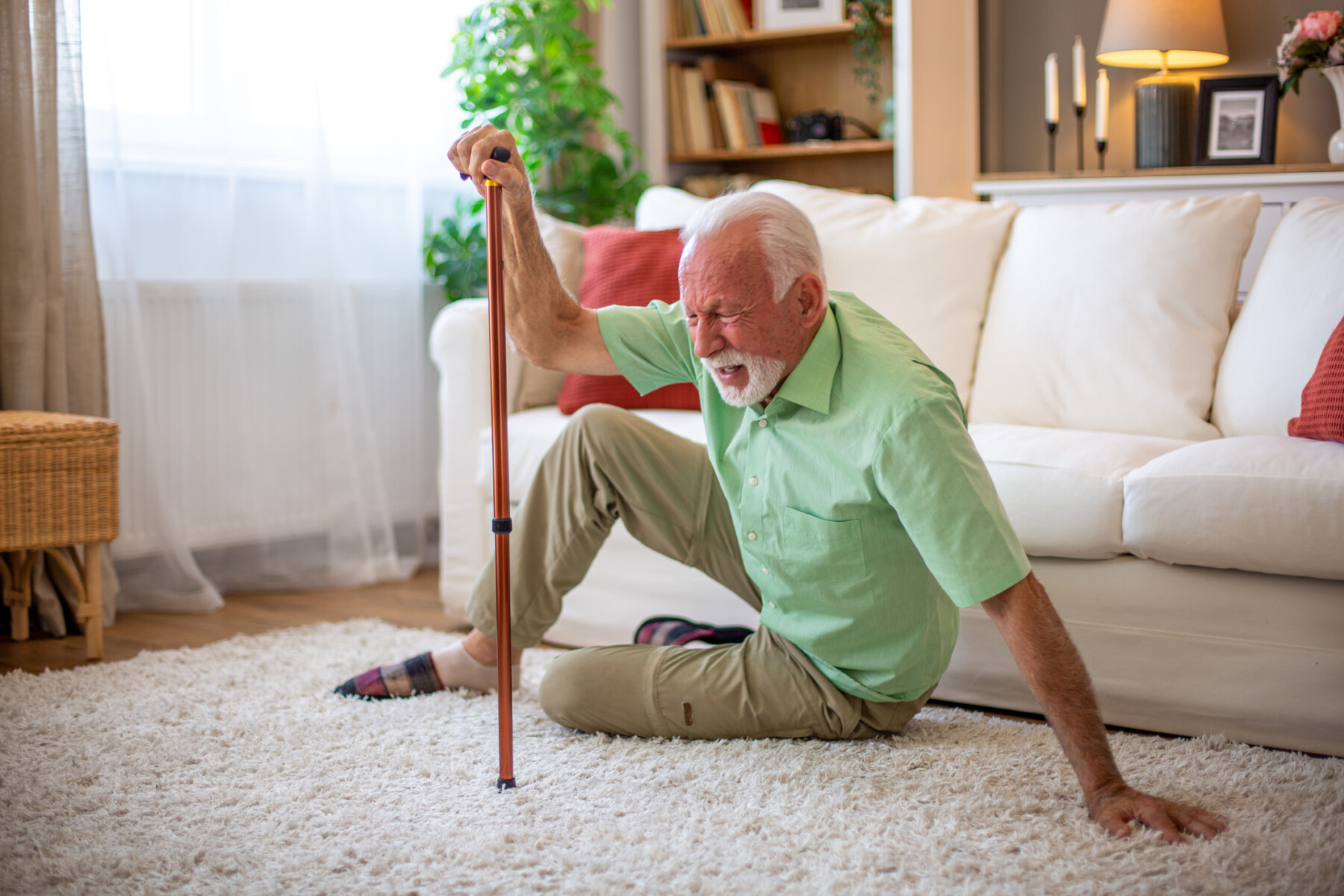
A model based on routine clinical tests may predict a Parkinson's patient's risk of falling in the next year. (Photo by iStock)
- Models using routine assessments of movement, cognition, and mood may predict first or repeat falls in Parkinson's disease patients.
- A study found these predictive frameworks help stratify patient fall risk effectively.
- Using additional biomarkers did not consistently improve short-term fall predictions.
Prediction models based on routine assessments of movement, cognition, and mood may help identify people with Parkinson’s disease at risk of experiencing their first fall or falling again within the following year, a study suggests.
The models distinguished patients at lower and higher risk of falls, although their accuracy was moderate and declined when tested in an independent group of patients. Adding brain imaging or biological markers did not consistently improve predictions.
“Next-year falls in [Parkinson’s disease] can be predicted with moderate discrimination and risk stratification from routinely available clinical measures,” the researchers wrote.
The study, “Prediction of First and Recurrent Falls in Parkinson’s Disease,” was published in Annals of Neurology.
Falls are a major concern for people with Parkinson’s, contributing to injuries, disability, loss of independence, and higher healthcare costs. More than 60% of patients fall, and many fall repeatedly. Previous falls are among the strongest indicators of future falls. Movement difficulties, cognitive impairment, and depressive symptoms have also been linked to falls. However, no predictive system can identify patients at risk before their first fall.

Data analysis provides clues
A team led by researchers at the University of Pennsylvania aimed to develop and independently validate models that predict first and repeat falls over the next year, and determine whether brain imaging or biomarkers improve predictions beyond standard clinical assessments.
They analyzed data from the Parkinson’s Progression Markers Initiative (PPMI), an observational study following thousands of volunteers with and without Parkinson’s, as well as from a separate UPenn group. They compared clinical assessments at one visit with falls reported at a later visit, typically about a year afterward.
After excluding visits with missing information, the first-fall model was developed using 773 of 820 PPMI visit-pairs. A visit-pair links two back-to-back clinic visits for the same patient, pairing their health assessments from the first visit with whether they reported a fall at the next visit. In this group, the mean age was 65.2, and 69% were men. The model was validated using 589 of 799 UPenn visit-pairs (mean age, 69.2; 66% men).
The repeat-fall model was developed using 302 of 359 PPMI visit-pairs (mean age, 69.4; 61.8% men) and validated using 137 of 323 UPenn visit-pairs (mean age, 71.9; 69.3% men).
Falls caused exclusively by gait freezing, a Parkinson’s symptom in which a person temporarily feels unable to move their feet despite intending to walk, were uncommon, accounting for 2.8% to 9.6% of falls across the study groups.
The first-fall model combined measures of motor symptom severity, overall cognitive abilities, and depressive symptoms. The repeat-fall model used Parkinson’s disease stage, depressive symptoms, and cognitive processing speed, a measure of how quickly a person can take in, understand, and respond to information. In both models, researchers adjusted for age, sex, and disease duration.
The models’ predictive accuracy was assessed using the area under the curve (AUC), a statistical measure in which 0.5 indicates performance no better than chance, and one represents perfect accuracy.
The first-fall model achieved AUCs of 0.704 with PPMI data and 0.630 with UPenn data. The repeat-fall model achieved an AUC of 0.683 in PPMI and 0.641 in UPenn.
Both models were able to distinguish risk groups. In UPenn, 7.1% of visit-pairs classified as low risk for a first fall were followed by a reported fall, compared with 18.5% in the high-risk group. For repeat falls, rates were 22.2% in the low-risk group and 65% in the high-risk group.
The researchers assessed whether the fall prediction models improved when additional information on biomarkers linked to Parkinson’s was added. These included measures of the alpha-synuclein seed amplification assay (SAA), which detects abnormal clumping of alpha-synuclein, a protein associated with the disease, and DaTscan, a brain imaging technique that measures dopamine transporter availability. Dopamine levels are reduced in Parkinson’s patients due to the loss of dopamine-producing nerve cells.
The team also assessed MRI measurements of brain volume and blood levels of phosphorylated tau 217 (p-tau217), a biomarker associated with Alzheimer’s disease.
Adding SAA and MRI measures slightly improved fall predictions in the PPMI group, but these benefits were not consistently observed at UPenn. DaTscan provided minimal additional benefit, while blood p-tau217 showed a larger improvement in predicting repeat falls in a small UPenn subgroup. However, the researchers cautioned that these findings were preliminary and limited by small sample sizes.
Overall, “these models provide a framework for further evaluation of risk stratification approaches, including applications in trial design to identify populations at higher short-term risk,” the researchers concluded.


Leave a comment
Fill in the required fields to post. Your email address will not be published.