
NDC-0524 for Parkinson’s may enter clinical testing in late 2025
Nitrase’s antibody therapy designed to target alpha-synuclein protein
Written by |
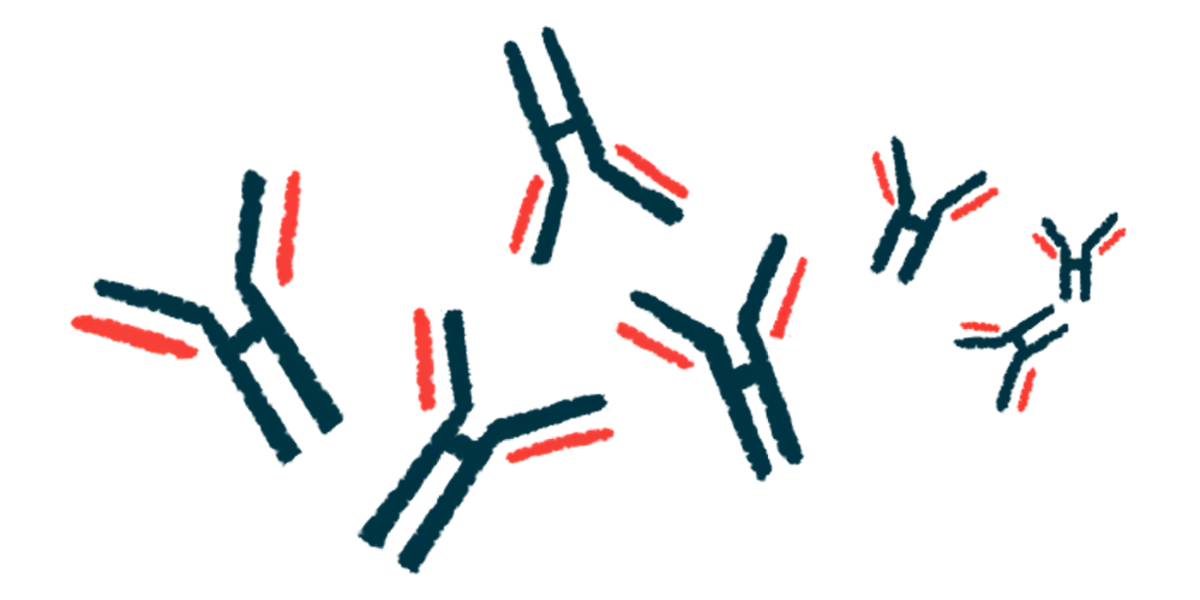
NDC-0524, an experimental antibody that Nitrase Therapeutics is developing as a treatment for people with Parkinson’s disease, is expected to enter clinical testing in the fourth quarter of 2025, or before the end of the year, according to a company press release.
The antibody, which targets nitrated alpha-synuclein — a naturally occurring modified form of the protein that misfolds as toxic clumps in Parkinson’s — delayed the protein’s buildup and spread in a mouse model of the disease. Those preclinical findings suggest NDC-0524 may slow symptom progression in patients, per the developer.
Digging deeper into the role of nitrated alpha-synuclein in Parkinson’s, researchers at Nitrase now identified glyoxalase domain-containing protein 4, or GLOD4, as the enzyme — a type of protein — responsible for introducing this chemical modification.
“The discovery of a protein with a new type of enzymatic activity that has never before been characterized is a significant scientific accomplishment, and the potential that it is a therapeutic target for Parkinson’s disease is a very exciting prospect for a difficult-to-treat disease,” said Irene Griswold-Prenner, PhD, CEO of Nitrase.
The study led by Griswold-Prenner, “A novel function of glyoxalase domain containing protein 4 (GLOD4) is associated with neuron dysfunction and neurodegeneration,” was published as a preprint in Research Square and is currently under peer review.

Clinical testing to focus on NDC-0524’s impact on alpha-synuclein
In Parkinson’s, misfolded alpha-synuclein forms toxic clumps called Lewy bodies, which cause the death of dopaminergic neurons — nerve cells that produce dopamine, a chemical needed for motor control. Lewy bodies can spread through the brain, leading to the death of more dopaminergic neurons. Scientists believe this may play a role in how motor symptoms of Parkinson’s progress over time.
Lewy bodies are rich in nitrated alpha-synuclein, which may be less soluble than other forms of the protein. Nitration, which refers to the introduction of a chemical group called nitro, can change how a protein functions or where it’s located in cells. Uncontrolled nitration is linked to diseases like Parkinson’s.
Nitration occurs with the help of a type of enzyme called a synuclein nitrase. Blocking its activity reduces toxic clumping of alpha-synuclein, according to Nitrase. Now, the researchers identified GLOD4 as an enzyme with synuclein nitrase activity in lab-grown nerve cells and a mouse model of Parkinson’s.
The enzyme broke down connections between dopaminergic neurons grown in the lab, and increased the formation of toxic clumps seeded with misfolded alpha-synuclein. In mice with a mutated version of alpha-synuclein — which develop symptoms mimicking those of Parkinson’s — removing GLOD4 slowed the spread of toxic clumps and delayed the onset of paralysis.
Understanding the role of GLOD4 and other nitrating enzymes in biology and diseases such as [Parkinson’s] … may unearth novel [disease-causing] mechanisms and potential interventions.
“GLOD4 impacts three pathogenic [disease-causing] cornerstones of Parkinson’s disease: [alpha-synuclein] nitration, [alpha-synuclein] aggregation [or clumping], and motor dysfunction,” Griswold-Prenner said. “This breakthrough discovery has meaningful implications for nitration-dependent diseases, such as neurodegenerative diseases.”
In addition to NDC-0524, the company is developing small molecules designed to inhibit GLOD4, which could prevent the formation of disease-causing toxic clumps, according to the researchers.
“Understanding the role of GLOD4 and other nitrating enzymes in biology and diseases such as [Parkinson’s], cancer, and autoimmunity may unearth novel [disease-causing] mechanisms and potential interventions,” the team wrote in the study abstract.



Leave a comment
Fill in the required fields to post. Your email address will not be published.