Depression in Parkinson’s disease
 Fact-checked by
Depression is a common nonmotor symptom of Parkinson’s disease that can significantly affect a person’s physical and mental health, but it is often overlooked or left untreated.
Depression is a mood disorder that causes persistent and overwhelming feelings of sadness, emptiness, or hopelessness. In people with Parkinson’s, it may result from changes in the brain or the emotional stress of living with a chronic condition.
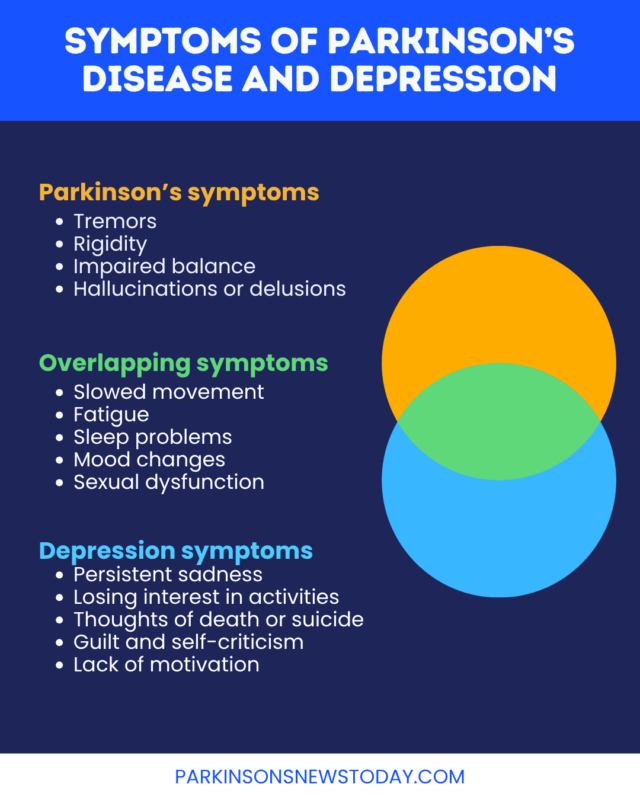
It can be difficult to recognize depression in Parkinson’s disease because its symptoms can overlap with other Parkinson’s symptoms. Patients and doctors may also focus more on the disease’s hallmark motor symptoms. Still, identifying and treating depression can help reduce its impact and improve quality of life.
Causes and symptoms of depression in Parkinson’s disease
Depression in Parkinson’s can involve a combination of mood changes and physical symptoms. It may also worsen other symptoms of Parkinson’s. Depression can occur at any stage of Parkinson’s progression — sometimes even before other symptoms of the disease appear.
Estimates vary, but around 40%-50% of people with Parkinson’s may experience some form of depression. However, experts believe depression is often underdiagnosed, so the true number is uncertain.
There is no single cause of depression in Parkinson’s, but changes in the brain related to the disease are thought to play an important role. People with Parkinson’s have imbalances in brain chemicals called neurotransmitters, which help regulate mood and emotions. These include dopamine, serotonin, and norepinephrine. Such imbalances may also contribute to Parkinson’s mood changes. The causes of depression in Parkinson’s are complex. Other factors that may contribute include:
- the stress and emotional burden of a Parkinson’s diagnosis
- social isolation related to disease symptoms
- medication side effects
- a personal or family history of mental health problems, or a genetic predisposition
- structural changes and inflammation in the brain due to Parkinson’s disease
Common signs and symptoms to look for
Emotional and mood-related signs of depression can include:
- persistent sadness or frequent crying
- loss of interest in activities
- irritability
- indecision or restlessness
- anxiety
- hopelessness
- low interest in socializing
- loss of motivation
- feeling like a burden to loved ones
- apathy (reduced motivation or emotional engagement)
- guilt, self-criticism, or feeling worthless
- difficulty concentrating
- thoughts of death or suicide
- fatigue
Depression can also cause physical symptoms, including:
- difficulty sleeping, or sleeping too much
- aches and pains
- constipation
- low energy or moving slowly
- loss of interest in sex (low libido)
- weight gain or weight loss
- appetite changes
Several of these symptoms, including sleep problems, fatigue, sexual challenges, and slowed movements, are also common in Parkinson’s, making it difficult to tell whether depression is responsible.
People may also have trouble recognizing their own Parkinson’s disease depression symptoms, so family or friends may be the first to notice signs of depression.
How depression impacts Parkinson’s symptoms
Depression is linked to more movement and thinking difficulties in Parkinson’s. Although its effect on movement symptoms is usually small, depression early in Parkinson’s has been linked to worse movement problems later.
Depression can also make problems with learning, decision-making, and other thinking skills harder to manage. It has been linked to a higher risk of Parkinson’s-related dementia.
Because Parkinson’s symptoms can affect one another, effectively managing Parkinson’s depression may also ease other symptoms, and vice versa. Care involving different types of healthcare professionals can improve quality of life for many people.
Managing and treating depression in Parkinson’s disease
The first step in treating Parkinson’s depression is recognizing and diagnosing it. Open communication between patients and healthcare providers is important. If people with Parkinson’s notice changes in their mood or simply don’t feel like themselves, they should talk to their care team.
Once depression has been diagnosed, doctors and patients can work together to create a treatment plan. This may include:
- changes to Parkinson’s medications
- antidepressant medications
- counseling or therapy
- exercise and other lifestyle changes
- supportive therapies
Medication and therapy
Doctors may recommend adjusting patients’ Parkinson’s treatments to better control movement and nonmovement symptoms. People who experience off episodes — when medication effects wear off and symptoms return between doses — have a higher risk of depression. Managing these changes in symptoms is important.
Doctors may recommend a combination of antidepressant medications and therapy to treat depression. Types of antidepressants include:
- selective serotonin reuptake inhibitors (SSRIs)
- serotonin-norepinephrine reuptake inhibitors (SNRIs)
- tricyclic antidepressants
Doctors often recommend SSRIs or SNRIs because tricyclic antidepressants can have more side effects. Finding a medication or combination that helps control depression without troublesome side effects may take time. The safest options may also depend on a person’s other medications and health conditions.
Counseling and therapy are also common treatments for depression and may be used alongside antidepressants. Clinical trials have supported cognitive behavioral therapy, which helps people recognize and change negative patterns of thinking and behavior.
Doctors may recommend electroconvulsive therapy (ECT) for severe depression or when other treatments haven’t worked. ECT uses controlled electrical stimulation of the brain. Although studies generally have not found worsening cognitive function after ECT in people with Parkinson’s, some patients may experience temporary confusion or disorientation.
Exercise and lifestyle interventions
Exercising is a simple, cost-effective way to improve mood and ease symptoms of depression. Exercise may help in several ways, including by improving brain function and reducing inflammation. People with Parkinson’s can work with their care teams to find a type of exercise that is safe and works well for them.
Research has identified various types of exercise that may help people with Parkinson’s stay active and manage depression symptoms, including:
- aerobic exercise, such as walking, cycling, or swimming
- balance training
- resistance training, like lifting weights
- dance
- yoga, tai chi, and other mind-body exercises
However, research has not yet established which types of exercise or schedules work best. The best approach may differ from person to person.
Other lifestyle changes may also help improve quality of life for people with Parkinson’s and depression, including:
- maintaining a healthy diet
- staying involved in recreational and social activities
- avoiding smoking
- limiting alcohol intake
- getting enough sleep
- following routines
- setting realistic goals
Non-conventional and complementary therapies
Some complementary therapies may also help people with Parkinson’s-related depression, including:
- massage
- light therapy or aromatherapy
- acupuncture
- relaxation or meditation
- music therapy
- support groups
These therapies are generally used alongside standard treatments, not as replacements. Research on how well they work has shown mixed results, but most are considered low-risk. People should still talk with their care teams before trying them because some may pose safety risks.
For example, St. John’s wort is an herbal supplement used for depression, but it can interact with certain Parkinson’s medications. For this reason, it generally isn’t recommended for people with Parkinson’s.
Transcranial magnetic stimulation (TMS) uses magnetic pulses to stimulate the brain and is sometimes used to treat depression. However, evidence of its effectiveness specifically for depression in people with Parkinson’s remains limited.
Parkinson's News Today is strictly a news and information website about the disease. It does not provide medical advice, diagnosis, or treatment. This content is not intended to be a substitute for professional medical advice, diagnosis, or treatment. Always seek the advice of your physician or other qualified health provider with any questions you may have regarding a medical condition. Never disregard professional medical advice or delay in seeking it because of something you have read on this website.