
More activity linked to slower motor, cognitive decline in Parkinson’s
Benefits appeared to involve mechanisms beyond preserving dopamine function
Written by |
- More physical activity was linked to slower decline in certain motor and cognitive measures and caudate DAT availability.
- Greater activity was tied to slower worsening of rigidity, axial symptoms, overall motor severity, and processing speed.
- Clinical benefits were not explained by DAT preservation, suggesting other brain mechanisms may be involved.
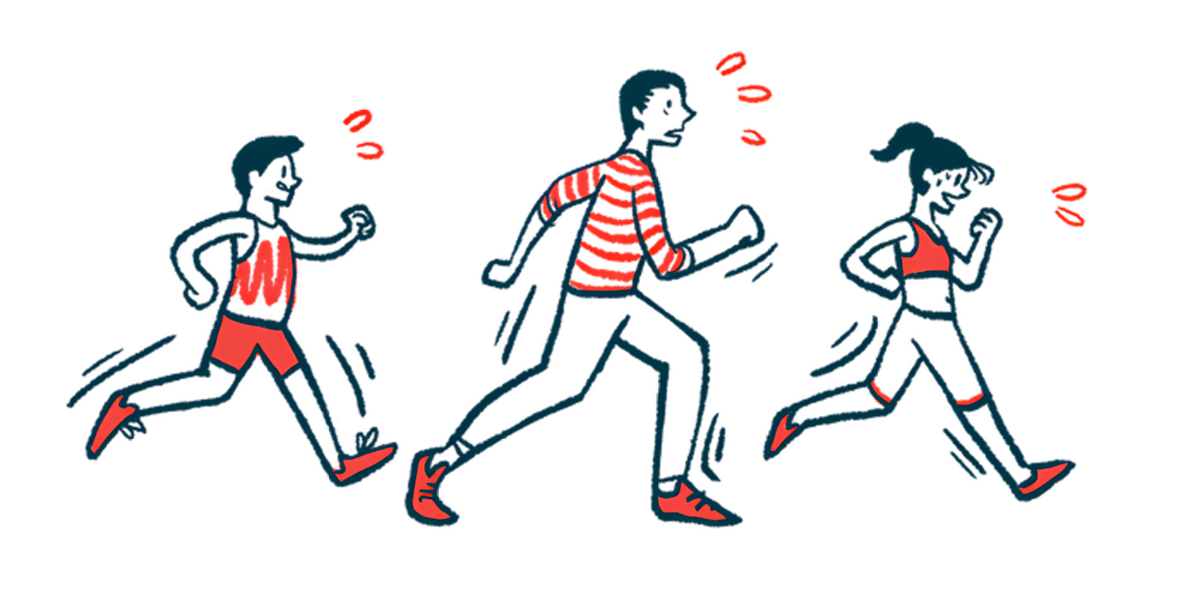
Higher levels of physical activity are associated with slower worsening of certain motor symptoms and better preservation of certain measures of cognitive function in people with Parkinson’s disease, according to a recent study.
People who were more physically active also showed a slower decline in dopamine transporter (DAT) availability in the caudate, a brain region affected by Parkinson’s. But that preservation of dopamine function did not explain the slower motor and cognitive decline linked to greater activity, suggesting other brain mechanisms may contribute to the benefits.
The study, “Physical activity promotes clinical benefits beyond dopaminergic preservation in Parkinson’s disease: a longitudinal analysis of the PPMI cohort,” was published in Neurological Research and Practice.

Physical activity may influence Parkinson’s progression
Parkinson’s disease is caused by the progressive loss of dopamine-producing nerve cells. Dopamine is a chemical messenger that helps the brain control movement, and its loss contributes to characteristic Parkinson’s motor symptoms such as rigidity, slowed movement, tremor, and walking difficulties.
Cognitive and other nonmotor symptoms also are common and can involve brain pathways beyond the dopamine system.
One way researchers can track changes in the dopamine system is by measuring DAT availability. DAT is a specialized protein on nerve cells that clears dopamine after its release into the space between nerve cells. In Parkinson’s, there is a steady decrease of the transporter in the brain, reflecting the progressive loss of dopamine-producing neurons.
Physical activity has consistently been associated with better outcomes in Parkinson’s, including slower worsening of gait and postural problems, daily functioning, and processing speed. But researchers still do not know exactly why activity may help, including whether its benefits come from protecting dopamine-producing nerve cells.
To find out, researchers in South Korea examined data from the Parkinson’s Progression Markers Initiative (PPMI), an ongoing observational study that follows people with newly diagnosed Parkinson’s who show reduced DAT availability on brain scans.
Participants had at least four years between physical activity assessments and at least two evaluations of DAT availability, motor symptoms, and cognitive function. The researchers analyzed DAT imaging, motor function, and cognitive function separately, using the available data for each. DAT availability was measured in the caudate and putamen, two major parts of the striatum, a brain region affected by Parkinson’s.
Physical activity was assessed using a questionnaire in which participants reported the intensity, frequency, and duration of their leisure, household, and work-related activities during the previous week. Researchers averaged participants’ scores over follow-up to estimate their usual level of physical activity.
The results showed that higher physical activity levels were significantly associated with a slower decline in DAT availability in the caudate, but not in the putamen.
Greater activity tied to slower motor and cognitive decline
Greater activity also was associated with slower worsening of axial symptoms — those affecting posture, balance, and walking — as well as rigidity and overall motor symptom severity. No significant associations were found for bradykinesia, or slowness of movement, or tremor.
Similar associations were seen on certain measures of cognition. People with higher physical activity had slower declines in scores on the Montreal Cognitive Assessment (MoCA), a measure of overall cognitive function, and the Symbol Digit Modalities Test (SDMT), which assesses processing speed. Other cognitive measures did not show significant associations after the researchers adjusted for multiple statistical comparisons.
When participants with the highest physical activity levels were compared with those with the lowest levels, the more active group showed slower declines in caudate DAT availability and processing speed, as well as slower worsening of axial motor symptoms.
In separate analyses of motor and cognitive outcomes, greater physical activity was associated with a slower decline in caudate DAT availability. However, DAT preservation did not explain the slower motor or cognitive decline associated with greater activity, suggesting other mechanisms may contribute to these benefits.
Overall, the findings link greater physical activity with slower worsening of certain motor symptoms and cognitive measures in Parkinson’s. They also suggest that preserving the brain’s dopamine system alone does not explain these associations.
“These findings highlight the importance of regular physical activity as a therapeutic strategy to enhance functional compensation, even in the context of progressive dopaminergic degeneration,” the researchers concluded.



Leave a comment
Fill in the required fields to post. Your email address will not be published.